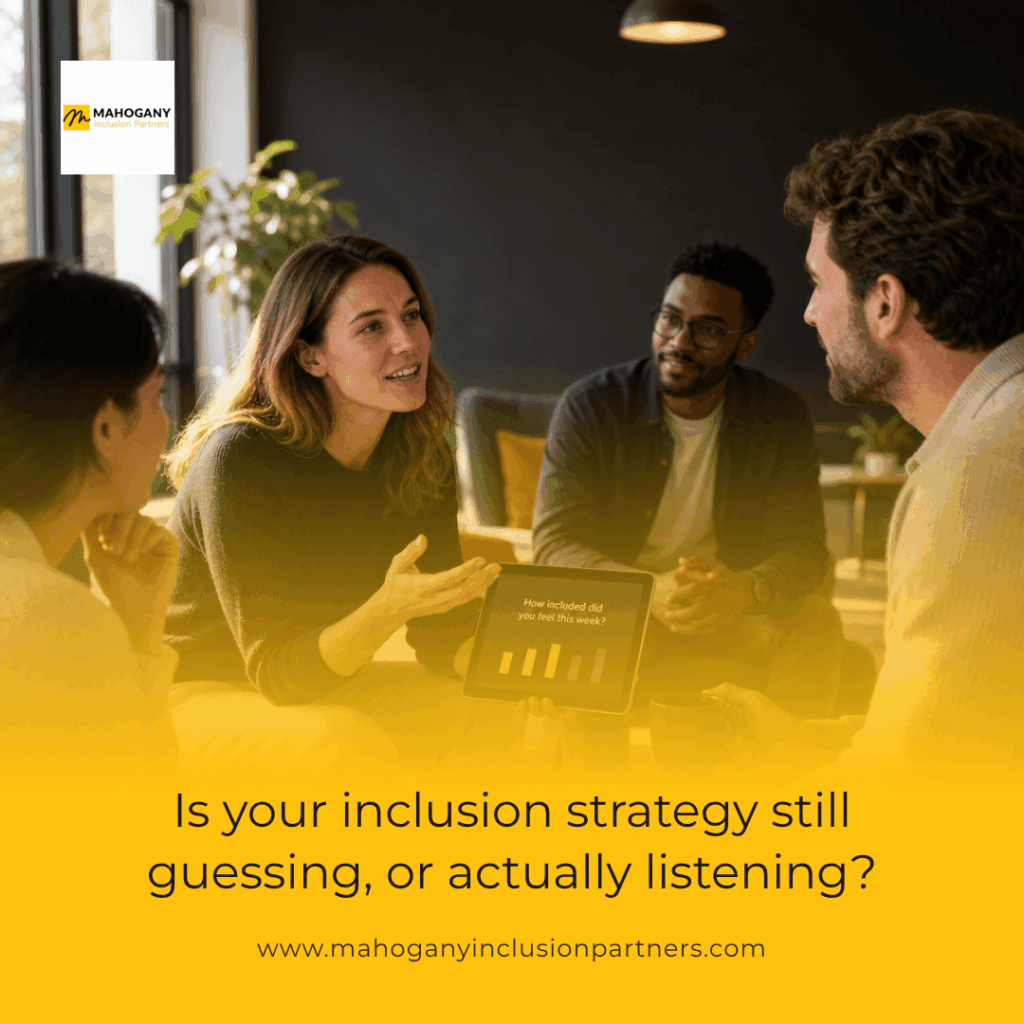
Leaders should bring board-level inclusion conversations backed by data, a clear business case, and a specific ask, not general concern. Boards respond to structure: a defined problem, measurable stakes, and a recommended path forward. Vague appeals to values rarely secure time, budget, or follow-through. The conversation works best framed as a performance issue with an evidence base, not a moral one.
Why do these conversations feel so difficult in the first place?
Many top team members lead inclusion efforts without personal experience of underrepresentation, and that gap can make the conversation feel like it belongs to someone else. Add in a board that's time-poor, numbers-driven, and wary of anything that sounds like it might expose the organisation to reputational risk, and it's easy to see why inclusion gets pushed down the agenda or handled with vague language instead of substance.
There's also a credibility question underneath it. A leader raising these issues needs the room to trust that they understand both the human dimension and the commercial one. Without that dual grounding, the conversation can drift into either performative territory (statements without substance) or overly clinical territory (metrics without meaning). Neither lands well with a board.
What should a leader bring into the room before raising the topic?
Before any board conversation on inclusion, we'd recommend arriving with three things prepared:
- A specific, evidenced problem. Not "our culture needs work" but a named gap: attrition patterns in a particular group, engagement survey results broken down by demographic, or findings from an inclusive culture audit that spans the organisational value chain.
- A business performance link. Boards move on innovation, retention, and performance. Connect the inclusion gap directly to one of those outcomes rather than treating it as a separate, parallel initiative.
- A concrete recommendation. Boards want a decision to make, not a discussion to have. Come with a defined next step, whether that's a strategy review, a facilitated top team session, or an audit.
How do you make the business case without sounding like you're lecturing the board?
Frame the conversation around performance outcomes the board already cares about: innovation, problem-solving, employee engagement, and retention. Psychological safety, for instance, is directly tied to whether people speak up with ideas or flag problems early. That's not an abstract cultural nicety; it's a mechanism that affects decision quality and risk exposure at every level of the organisation.
Rather than opening with statistics about diversity in the abstract, we've found it lands better to open with a specific organisational challenge: a stalled initiative, a pattern in exit interviews, a recurring theme in engagement data. Boards engage with problems they can picture. Once the problem is real to them, the case for action follows naturally.
What if the board pushes back or seems reluctant to engage?
Reluctance often comes from uncertainty about what "doing something" actually involves, not from disagreement with the principle. In that moment, it helps to have a lower-risk first step ready: a facilitated session for the top team, a diagnostic audit, or a scoped piece of coaching. Boards are far more willing to approve a defined, time-bound piece of work than an open-ended commitment.
It's also worth naming, plainly, that struggling with this isn't unusual. A recent cross-industry survey of over 100 UK organisations of varying sizes found that the journey towards inclusion remains challenging for most, regardless of size or sector. That context can take pressure off individual board members who might otherwise feel singled out or defensive.
How do you keep the conversation from becoming a one-off?
A single successful board conversation doesn't build a culture; it opens a door. The follow-through matters more than the pitch. That means setting measurable goals from the outset (not vague ambitions but tracked metrics), agreeing a review cadence, and giving someone clear ownership of progress between board meetings.
Robust metrics and analytics are what separate a genuine strategy from a stated intention. Boards that see quarterly movement on defined indicators stay engaged. Boards that hear the same broad commitments repeated without evidence of change tend to lose interest, and inclusion quietly slips off the agenda again.
Common questions about board conversations on inclusion
What data should I bring if my organisation hasn't done a formal audit yet?
Start with what already exists: engagement survey results segmented by demographic, exit interview themes, promotion and retention patterns by group, and any informal feedback gathered through employee networks. An inclusive culture audit can formalise this later, but existing data is usually more available than leaders expect.
How do I raise this if I don't have personal experience of underrepresentation myself?
Credibility here comes from preparation and process, not personal identity. Leading with evidence, a clear business rationale, and a willingness to bring in expert facilitation where needed builds trust faster than trying to speak from lived experience you don't have.
What if the board sees inclusion as an HR issue rather than a board-level one?
Reframe it around the outcomes the board already owns: innovation, risk, retention, and performance. Once inclusion is positioned as a driver of those outcomes rather than a standalone HR programme, it naturally becomes a board-level conversation rather than a delegated one.
How often should inclusion be on the board agenda?
Quarterly is a reasonable minimum for reviewing metrics and progress against goals, with a deeper annual review tied to strategy and audit findings. Anything less frequent risks the topic losing momentum between updates.
Getting this right in the boardroom sets the tone for the entire organisation below it. If you're preparing for a board conversation on inclusion and want the data, framing, or facilitation support to make it land, Mahogany Inclusion Partners works directly with top teams on exactly this: strategy development, audits, and top team facilitation built around your organisation's specific goals and culture.
Get in touch with us at mahoganyinclusionpartners.com to talk through what a board-ready inclusion case would look like for your organisation.