A signed pledge on the company intranet. A statement in the annual report. A banner on LinkedIn during a key awareness month. Most organisations have done at least one of these things, and the leaders behind them genuinely meant every word.
So why does employee trust in leadership inclusion commitments remain so fragile?
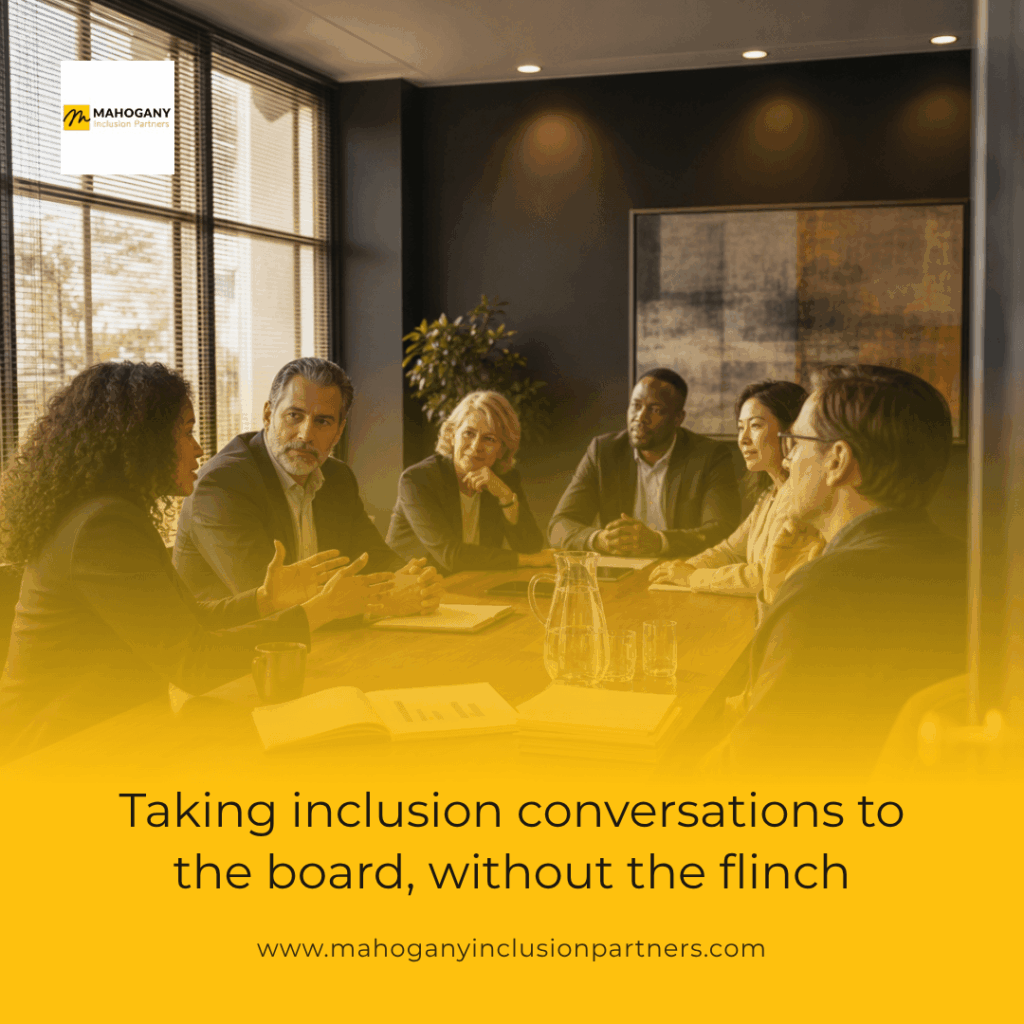
The honest answer is that intentions and actions are not the same thing, and your people know the difference. For C-Suite leaders and boards steering large, complex organisations, the gap between a well-worded pledge and a genuinely lived commitment is where inclusion strategies quietly fall apart. Closing that gap is not just a moral priority; it is a measurable business one.
Here is how to design a senior leadership inclusion commitment that your organisation will actually feel.
Start With Accountability, Not Announcements
The most common mistake we see at leadership level is treating the communication of a commitment as the commitment itself. Announcements create attention; accountability creates change.
A robust senior leadership inclusion commitment starts with clearly defined ownership at the top. This means each member of the top team, not just the Chief People Officer or the Head of D&I, holds a named responsibility within the inclusion strategy. When inclusion is everybody's agenda in theory but nobody's agenda in practice, it stalls.
Ask yourself: if your inclusion goals were reported on in the same way as revenue targets, what would the board meeting look like? Building that same rigour into your inclusion strategy is not bureaucratic; it is the thing that signals to your entire workforce that this is real.
Separate Personal Credibility From Personal Experience
One of the most common barriers we hear from senior leaders is uncertainty about how to lead inclusion efforts authentically when their own lived experience does not reflect underrepresentation. This is a legitimate concern, and it deserves a direct response.
Credibility in inclusion leadership is built through behaviour, not biography. You do not need to have experienced marginalisation to lead with integrity on inclusion. What your teams are watching for is whether you listen actively, whether you act on what you hear, and whether you hold yourself and your peers accountable when things fall short.
This is where personalised coaching and leadership development make a material difference. Building the knowledge, language, and frameworks to navigate inclusion conversations confidently means leaders stop defaulting to silence or delegation when it matters most. We support senior teams directly with this kind of capability building, because inclusion leadership is a skill that can absolutely be developed.
Build Psychological Safety Into the Architecture of the Organisation
No inclusion commitment survives long without psychological safety. If people in your organisation do not feel safe raising concerns, sharing honest feedback, or flagging when something is wrong, your strategy is working with one hand tied behind its back.
Psychological safety is not a culture initiative you run once. It is a condition you maintain through consistent leadership behaviour over time. Senior leaders set the tone here more powerfully than any policy document. When a board member acknowledges uncertainty, invites challenge, or responds to difficult feedback without defensiveness, that behaviour cascades.
Practically, this means designing regular forums at every level where honest dialogue is not just permitted but actively sought. It means reviewing how your organisation responds when people do speak up. And it means ensuring your top team reflects on its own dynamics first, because psychological safety rarely exists lower in the organisation than it does in the boardroom.
Make Your Data Do the Work
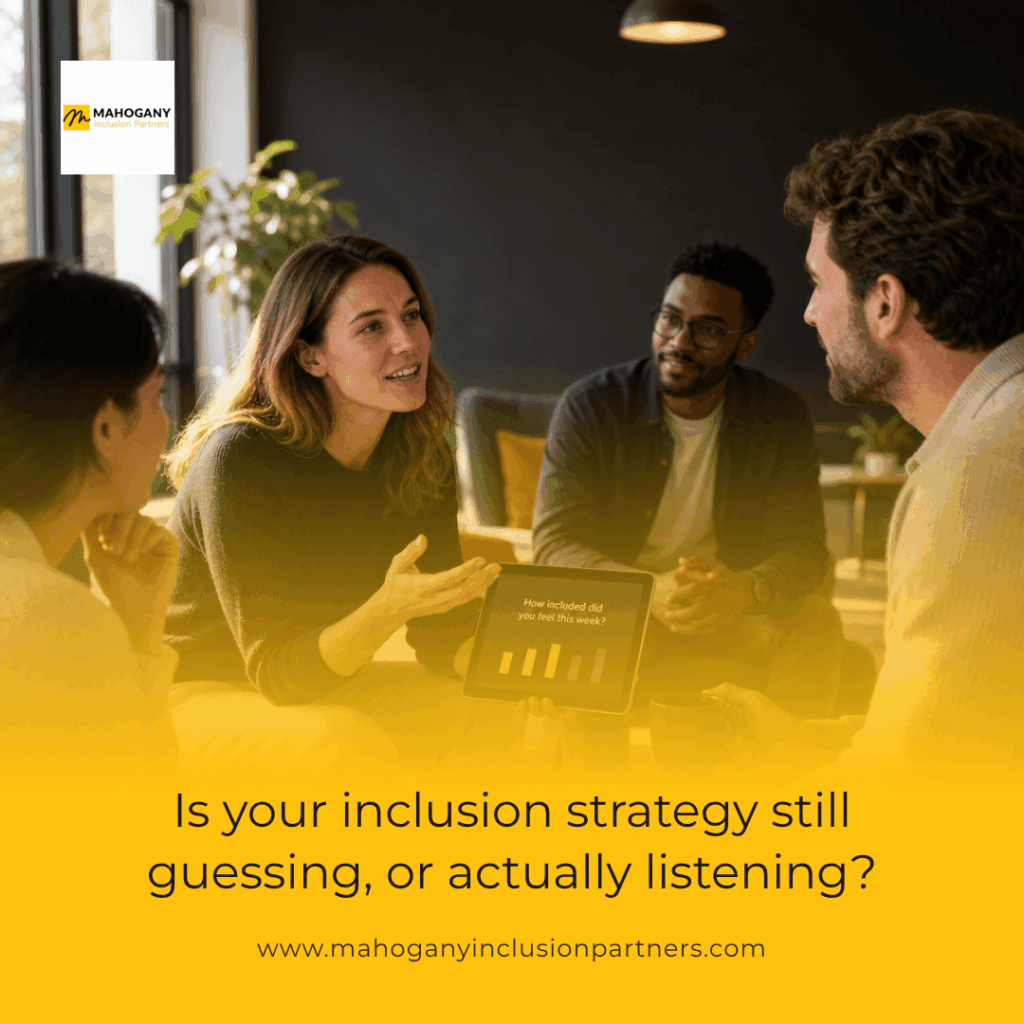
Inclusion without measurement is aspiration without direction. A meaningful senior leadership commitment includes robust metrics and analytics that track concrete objectives over time.
This goes well beyond diversity headcount. The data that genuinely informs inclusion strategy captures things like: belonging scores across different employee groups, rates of progression disaggregated by ethnicity, gender, disability and other characteristics, exit interview themes, and the results of regular culture audits. When leaders engage with this data at the top team level, it shifts the conversation from "how do we look?" to "what do we need to do differently?"
We work with organisations to build this kind of measurement infrastructure from the ground up, making sure it captures what actually matters for your specific workforce, sector, and goals, rather than what is easiest to count.
Equity Across the Whole Workforce, Not Just Targeted Groups
A commitment that only visibly supports underrepresented groups, without addressing the needs and concerns of the wider workforce, tends to create friction rather than cohesion. High-performing inclusive cultures address all employee needs equitably, and senior leaders who communicate their inclusion strategy in those terms build significantly more organisational buy-in.
This does not mean diluting the commitment or avoiding difficult conversations about structural inequity. It means framing inclusion as a business and human imperative that benefits everyone, because the evidence shows clearly that it does. Organisations with genuinely inclusive cultures outperform on innovation, retention, engagement, and decision-making. That is a message that resonates across the workforce.
Commit to Iteration, Not Just Initiation
One of the clearest markers of a serious inclusion commitment at leadership level is the willingness to revisit, revise, and remain in the work over time. The organisations that make the most sustainable progress are not the ones with the most ambitious launch events; they are the ones that treat inclusion as an evolving priority, not a project with a completion date.
This means conducting regular organisational audits and assessments, revisiting your strategy when the data or your workforce feedback tells you something needs to change, and continuing to invest in leadership capability year on year.
The pledge is where you tell your organisation what you believe. Everything that comes after is where you show them.
If your senior leadership team is ready to move from commitment on paper to commitment in practice, we would love to work with you. Our award-winning consultancy has supported some of the UK's most prominent organisations, from major retailers to private banks to the House of Commons, to build inclusion strategies that are rigorous, tailored, and genuinely felt. Visit Mahogany Inclusion Partners to find out how we can help your top team lead with confidence.