Your organisation publishes a bold inclusion statement on its website. The annual report celebrates diversity milestones. Leadership speaks confidently about psychological safety at industry events. And yet, somewhere between the boardroom and the break room, the message fractures. Employees hear one story; the outside world hears another. That gap is not just a communications problem. It is a credibility problem, and it quietly undermines everything your inclusion strategy is trying to build.
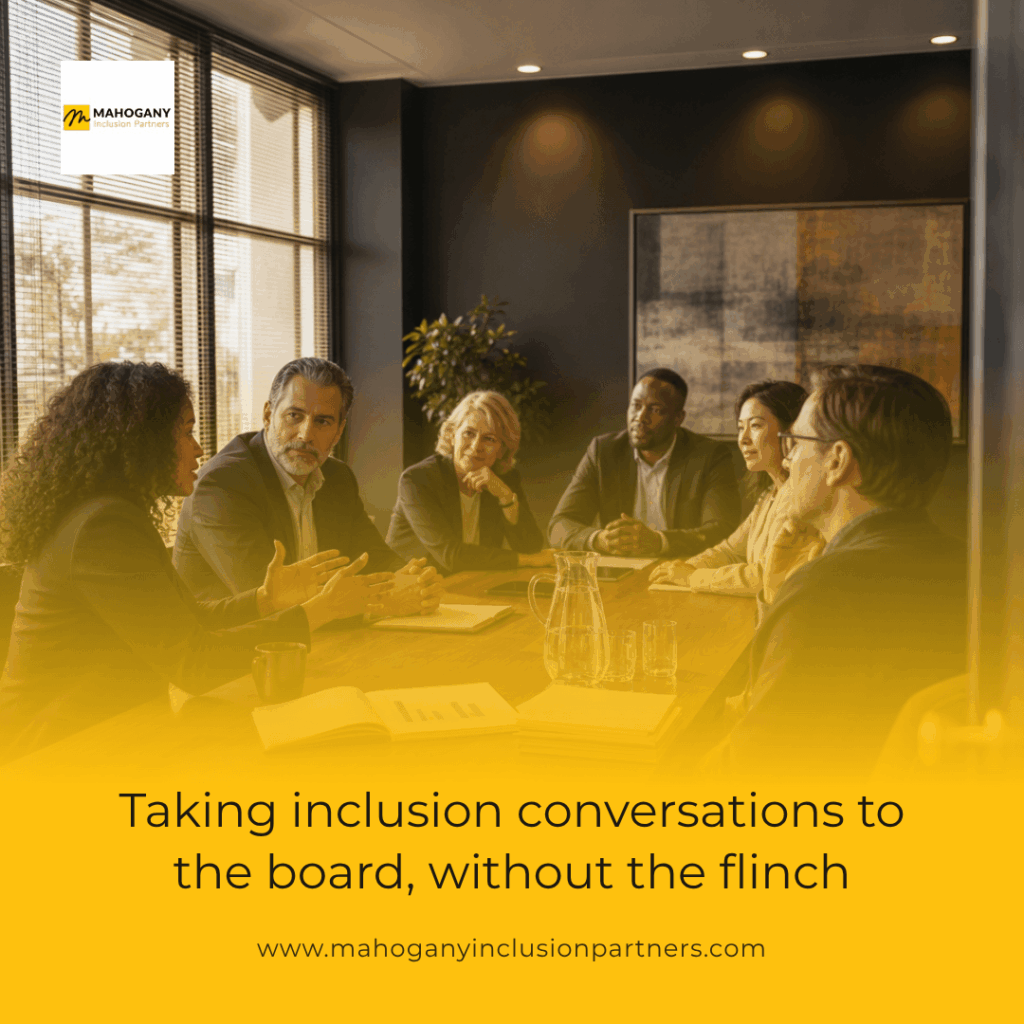
For C-Suite leaders and boards serious about high-performing, inclusive cultures, getting the narrative aligned across internal and external communications is not a nice-to-have. It is foundational.
Why the Narrative Gap Exists in the First Place
Most organisations do not set out to tell inconsistent stories. The misalignment tends to happen gradually. External communications are often shaped by marketing, PR, or investor relations teams focused on reputation. Internal communications sit with HR, people teams, or culture leads focused on engagement. These functions rarely collaborate closely enough on inclusion messaging, and the result is a version of inclusion that looks polished from the outside but feels hollow to the people living it day to day.
A recent cross-industry survey of over 100 UK organisations found that the journey towards inclusion remains challenging for most, even those with genuine commitment and strong internal teams. One of the most persistent obstacles is the disconnect between stated values and lived experience. When employees feel that what is said publicly does not match what happens internally, trust erodes. And when trust erodes, psychological safety follows.
What a Coherent Inclusion Narrative Actually Looks Like
Alignment does not mean using the same words everywhere. It means the same values, principles, and commitments are recognisable whether someone is reading your careers page, sitting in a team meeting, or watching your CEO speak at a conference.
Internally, a coherent inclusion narrative shows up in how performance conversations are structured, how feedback is given, how conflicts are resolved, and how leadership models the behaviours it expects from everyone else. It lives in the language managers use, the questions that get asked in all-staff meetings, and whether employees who raise inclusion concerns feel heard or sidelined.
Externally, it shows up in who you feature in case studies, how you talk about pay equity in your annual report, and whether your public commitments are specific enough to be held accountable. Vague aspiration is not a narrative. It is noise.
The organisations that get this right tend to share one quality: their inclusion story starts with data, not aspiration. They know where they are, not just where they want to be, and they are willing to say so publicly.
Building the Bridge Between Internal and External Messaging
There are several practical steps leadership teams can take to close the gap.
Start with a narrative audit. Before you can align your communications, you need to understand where they currently diverge. Review your external inclusion statements alongside internal communications from the past 12 months. Look for contradictions, silences, and areas where the external message makes promises the internal culture has not yet caught up to. This is uncomfortable work, but it is necessary.
Create shared language across functions. One of the most effective things a leadership team can do is agree on a set of core inclusion principles that every function uses as a reference point. These principles should be specific enough to mean something. "We believe in belonging" is a feeling. "We ensure all employees have equitable access to sponsorship and stretch assignments" is a commitment.
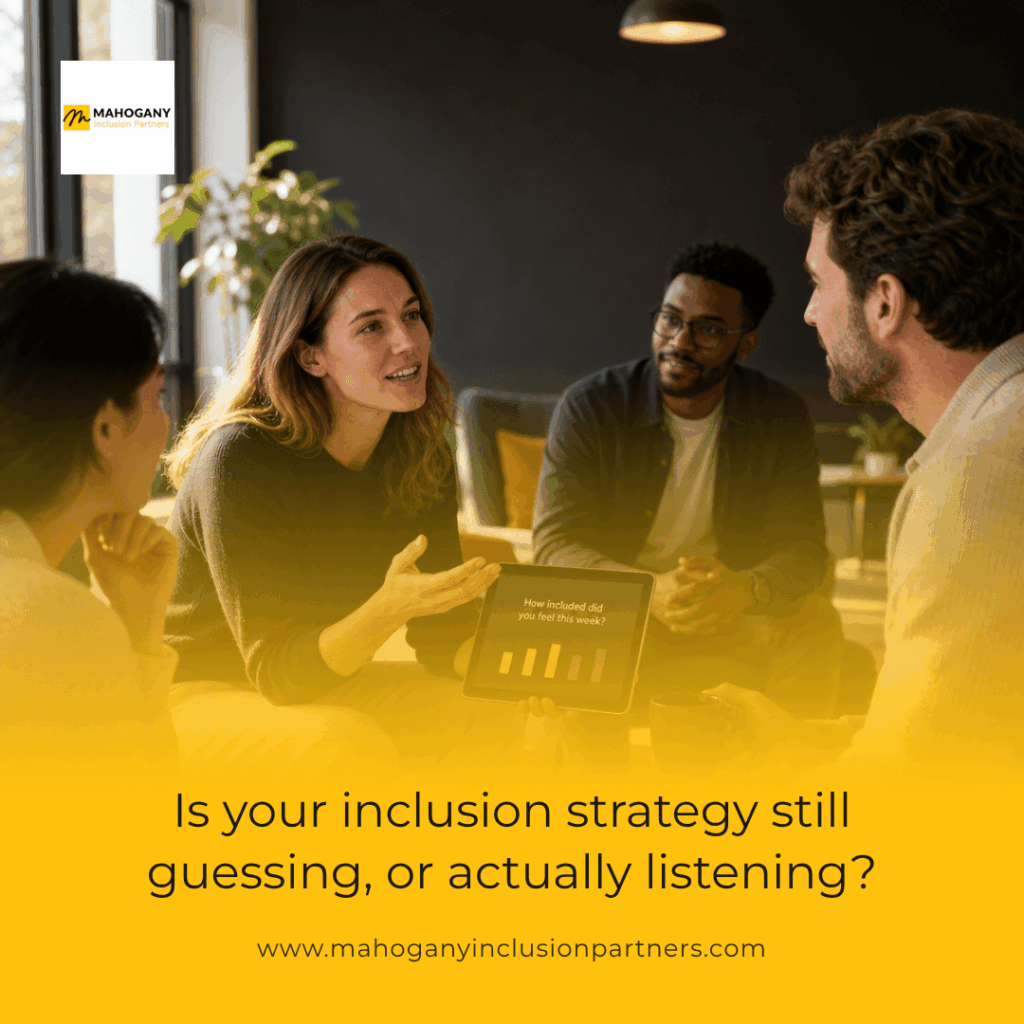
Involve employees in shaping the external narrative. When your people are the authors of your inclusion story, rather than its audience, the message becomes inherently more consistent. Employee voice mechanisms, co-created culture statements, and inclusion councils that have a genuine seat at the strategic table all help to build this bridge. The added benefit is that employees who feel ownership of the narrative become its most credible advocates externally.
Train leaders to communicate with authenticity. One of the challenges we hear most often from C-Suite leaders is the difficulty of speaking credibly about inclusion, particularly without personal experience of underrepresentation. This is a real and valid concern, and it is one that derails many well-intentioned inclusion narratives. The answer is not silence. It is preparation, coaching, and the confidence to lead with curiosity rather than authority. Leaders who are willing to say "here is what we are still learning" are often more trusted, internally and externally, than those who project false certainty.
The Metrics That Keep the Narrative Honest
Perhaps the most powerful alignment tool available to senior leaders is a robust, publicly shared set of inclusion metrics. When your external communications reference the same data points your internal strategy is tracking, the narrative becomes self-reinforcing. Progress feels real because it is measurable. Challenges are acknowledged because the data makes them visible.
This does not require perfection. It requires transparency. Organisations that share both their progress and their gaps build significantly more trust than those who only communicate wins. That trust is what sustains long-term cultural change, rather than cycling through inclusion initiatives that lose momentum after the launch announcement.
Robust metrics and analytics also protect leadership from the communications trap of overclaiming. When your external narrative is grounded in specific, trackable goals, it becomes much harder to slip into the kind of vague aspiration that employees recognise immediately as performative.
Turning Alignment into Competitive Advantage
When your inclusion narrative is genuinely coherent, something shifts. Recruitment improves because candidates trust what they are reading. Retention strengthens because employees feel the culture matches the promise. Innovation accelerates because psychological safety is real rather than rhetorical. And your organisation's reputation, with clients, partners, and the broader public, becomes something that genuinely reflects who you are.
This is precisely the kind of high-performing, inclusive culture that creates sustainable competitive advantage. It does not happen by accident, and it does not happen through communications strategy alone. It happens when leadership commits to the harder work of aligning the story with the reality, and then investing in building the reality up to meet the story.
If you are ready to bring your inclusion narrative into genuine alignment, across your organisation and beyond it, we would welcome the conversation. Visit Mahogany Inclusion Partners to explore how our tailored strategies, audits, and leadership coaching can help your organisation build an inclusion story it can stand behind, everywhere.